 |
(4.59) |
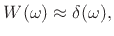
We close this chapter with a general discussion of optimal windows in a wider sense. We generally desire
|
(4.59) |
A window transform can generally be regarded as the frequency response
of a lowpass filter having a stop band corresponding to
the side lobes and a pass band corresponding to the main lobe
(or central section of the main lobe). Optimal lowpass filters
require a transition region from the pass band to the stop
band. For spectrum analysis windows, it is natural to define the
entire main lobe as ``transition region.'' That is, the
pass-band width is zero. Alternatively, the pass-band could be
allowed to have a finite width, allowing some amount of ``ripple'' in
the pass band; in this case, the pass-band ripple will normally be
maximum at the main-lobe midpoint (
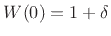 , say), and at the
pass-band edges (
, say), and at the
pass-band edges (
 ). By
embedding the window design problem within the more general problem of
FIR digital filter design, a plethora of optimal design techniques can
be brought to bear
[204,258,14,176,218].
). By
embedding the window design problem within the more general problem of
FIR digital filter design, a plethora of optimal design techniques can
be brought to bear
[204,258,14,176,218].