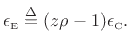
Our goal is to find the allpass coefficient
such that the
frequency mapping
 angle
angle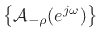
best approximates the Bark scale
 for a given sampling rate
 . (Note that the frequencies
  ,
,
 , and
are all expressed in radians per sample, so that a frequency of half
of the sampling rate corresponds to a value of
, and
are all expressed in radians per sample, so that a frequency of half
of the sampling rate corresponds to a value of  .)
.)
Using squared frequency errors to gauge the fit between
and
its Bark-warped counterpart, the optimal mapping-parameter  may
be written as
may
be written as
![$\displaystyle \rho ^*= \hbox{Arg}\left[\min_{\rho }\left\{\left\Vert\,a(\omega )- b(\omega )\,\right\Vert\right\}\right],
$](img2877.png)
where
 represents the
 norm. (The superscript
`
norm. (The superscript
` ' denotes optimality in some sense.) Unfortunately, the
frequency error
' denotes optimality in some sense.) Unfortunately, the
frequency error
is nonlinear in
, and its norm is not easily minimized directly.
It turns out, however, that a related error,
has a norm which is more amenable to minimization. The first issue we address is how the minimizers of
 and
and
 are
related.
are
related.
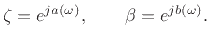
Denote by  and
and  the complex representations of the
frequencies
and
on the unit circle,
the complex representations of the
frequencies
and
on the unit circle,
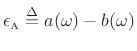
As seen in Fig.E.2, the absolute frequency error
 is the
arc length between the points
and
, whereas
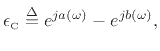
is the
arc length between the points
and
, whereas
 is the chord length or distance:
The desired arc length error
 gives more weight to large errors
than the chord length error
gives more weight to large errors
than the chord length error
 ; however, in the presence of small
discrepancies between
and
, the absolute errors are
very similar,
; however, in the presence of small
discrepancies between
and
, the absolute errors are
very similar,
Accordingly, essentially the same
results from minimizing
or
when the fit is uniformly good over
frequency.
The error
is also nonlinear in the parameter
, and to find
its norm minimizer, an equation error is introduced, as is
common practice in developing solutions to nonlinear system
identification problems [152]. Consider mapping
the frequency
 via the allpass transformation
 ,
,
Now, multiply (E.3.1) by the denominator
 , and
substitute
, and
substitute
 from (E.3.1), to get

Rearranging terms, we have
where
 is an equation error defined by
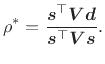
It is shown in [269] that the optimal weighted least-squares conformal map parameter estimate is given by
If the weighting matrix
 is diagonal with kth diagonal
element
is diagonal with kth diagonal
element
 , then the weighted least-squares
solution (E.3.1) reduces to
, then the weighted least-squares
solution (E.3.1) reduces to
 |
 |
![$\displaystyle \frac{\sum_{k=1}^K
v(\omega _k)
\sin\left[\frac{b(\omega_{k})-\omega_{k}}{2}\right]
\sin\left[\frac{b(\omega_{k})+\omega_{k}}{2}\right]
}{\sum_{k=1}^K
v(\omega _k)\sin^2\left[\frac{b(\omega_{k})+\omega_{k}}{2}\right]}$](img2904.png) |
|
|
![$\displaystyle \frac{\sum_{k=1}^{K}
v(\omega _k)
\left\{\cos\left[b(\omega_{k})\right]- \cos(\omega_{k})\right\}}{%
\sum_{k=1}^{K} v(\omega_{k}) \left\{\cos\left[b(\omega_{k}) + \omega_{k}\right]- 1\right\}}.$](img2905.png) |
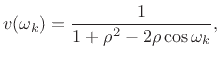
The kth diagonal element of an optimal diagonal weighting matrix
is given by [269]
Note that the desired weighting depends on the unknown map parameter
. To overcome this difficulty, we suggest first estimating
using
 , where
 denotes the identity matrix,
and then computing
using the weighting (E.3.1) based on the
unweighted solution. This is analogous to the Steiglitz-McBride
algorithm for converting an equation-error minimizer to the more
desired ``output-error'' minimizer using an iteratively computed
weight function [151].
denotes the identity matrix,
and then computing
using the weighting (E.3.1) based on the
unweighted solution. This is analogous to the Steiglitz-McBride
algorithm for converting an equation-error minimizer to the more
desired ``output-error'' minimizer using an iteratively computed
weight function [151].

![\includegraphics[width=3in]{eps/eaec}](img2884.png)